

 Image 1 of 1
The arrival of electricity in the early 20th century transformed pendant design. Fixtures became slimmer, safer, and more expressive. Designers like Poul Henningsen introduced layered‑shade pendants that diffused light softly and evenly, marking the beginning of modern lighting design. Mid‑century and contemporary pendants continued this evolution, exploring new materials, cleaner lines, and eventually LED technology.
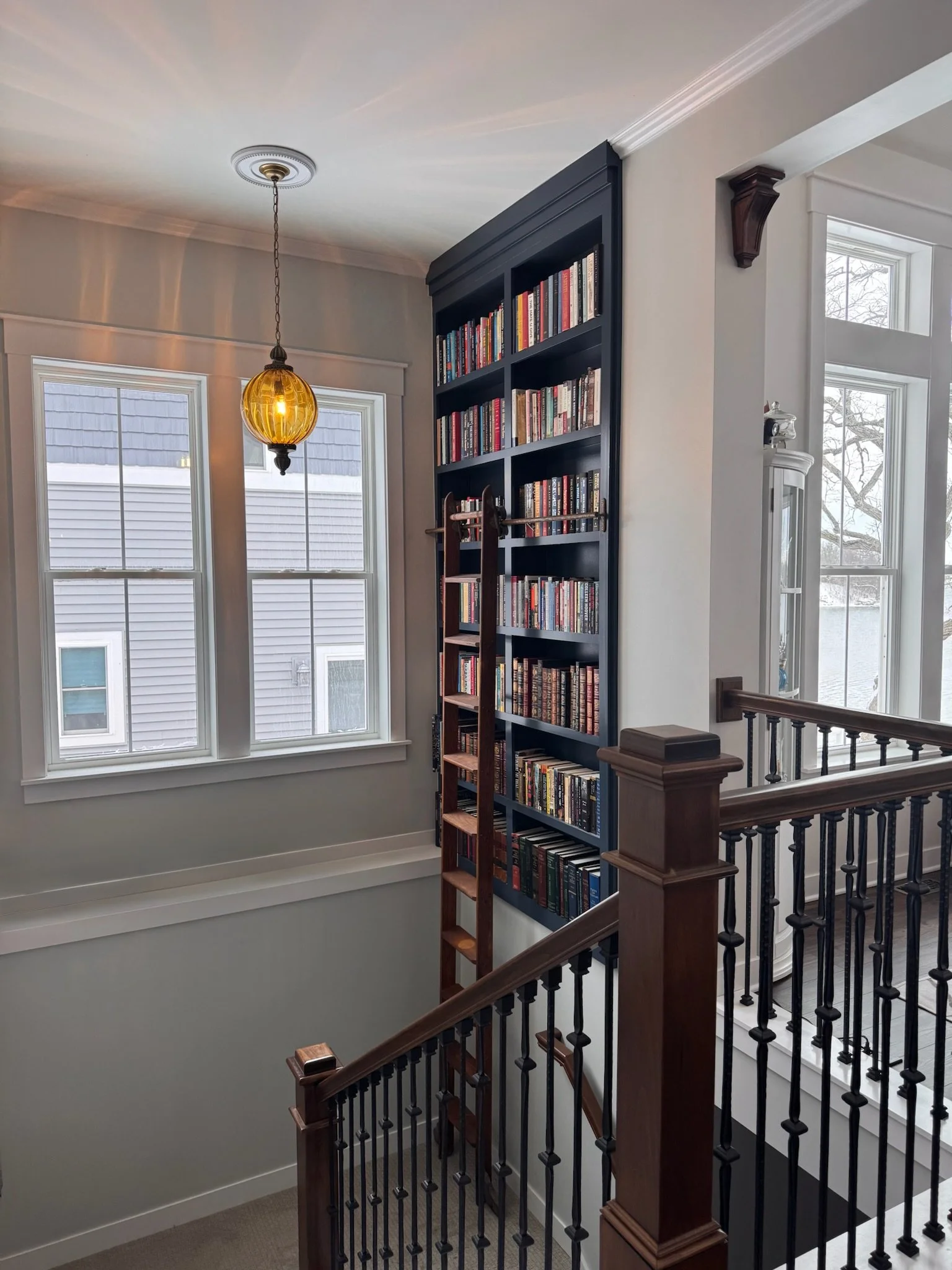
In 1905, the Putnam Rolling Ladder Company was founded in New York City, establishing what would become the classic American rolling library ladder. Putnam’s design — a tall, elegant wooden ladder gliding on a precision‑engineered rail — became the industry standard and remains largely unchanged for more than a century. Their ladders were originally used in bookstores, libraries, and warehouses, later expanding into residential interiors as a functional design statement.
The arrival of electricity in the early 20th century transformed pendant design. Fixtures became slimmer, safer, and more expressive. Designers like Poul Henningsen introduced layered‑shade pendants that diffused light softly and evenly, marking the beginning of modern lighting design. Mid‑century and contemporary pendants continued this evolution, exploring new materials, cleaner lines, and eventually LED technology.
In 1905, the Putnam Rolling Ladder Company was founded in New York City, establishing what would become the classic American rolling library ladder. Putnam’s design — a tall, elegant wooden ladder gliding on a precision‑engineered rail — became the industry standard and remains largely unchanged for more than a century. Their ladders were originally used in bookstores, libraries, and warehouses, later expanding into residential interiors as a functional design statement.