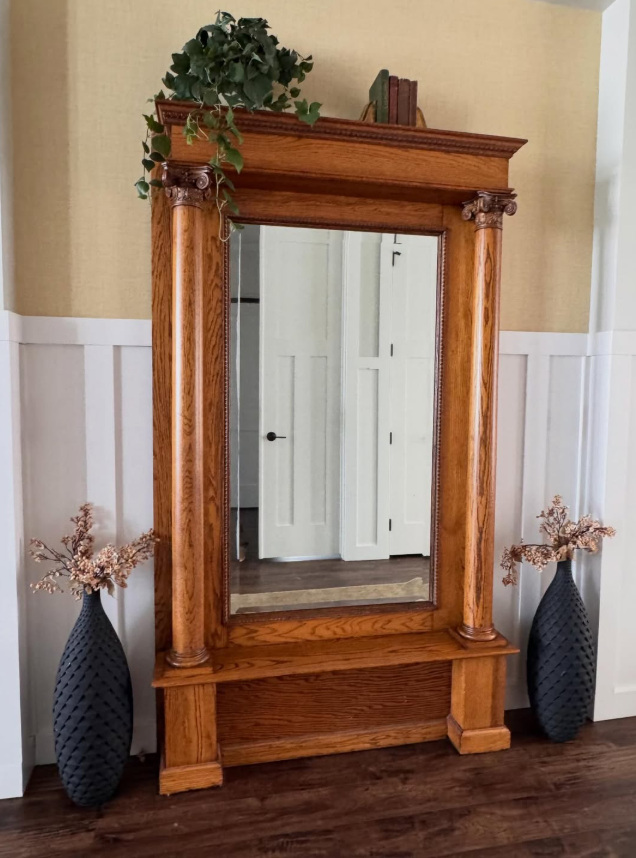
Pier Mirror
This antique pier mirror reflects the architectural elegance and craftsmanship of late‑19th‑century to early‑20th‑century American and European design. Pier mirrors were traditionally installed between windows or along narrow wall sections (“piers”) in formal parlors, entry halls, and drawing rooms, where their tall proportions helped amplify natural light and visually expand interior spaces.
The mirror’s fluted side columns and decorative capitals draw directly from neoclassical influences that were popular from the 1880s through the early 1900s. These details echo the architectural vocabulary of the period, when furniture makers often borrowed motifs from Greek and Roman design to convey refinement and permanence. The rich, hand‑finished wood frame speaks to the era’s reliance on skilled cabinetmakers who shaped and carved each element using traditional tools.
Above the frame, the broad cornice shelf is characteristic of pier mirrors produced during this time. Originally, these shelves served both decorative and practical purposes: homeowners displayed small objects, botanical arrangements, or books to soften the verticality of the mirror and integrate it into the room’s overall composition.
Mirrors of this scale were considered status pieces, signaling both taste and prosperity. They were commonly found in well‑appointed homes in cities such as New York, Boston, and Chicago , as well as in European townhouses where tall ceilings and narrow wall bays made pier mirrors an essential architectural accessory.
Today, surviving examples like this one are prized for their craftsmanship and the quiet grandeur they bring to contemporary interiors. They serve not only as reflective surfaces but as preserved fragments of domestic history, linking modern spaces to the decorative traditions of a century ago.
Thoughtfully curated architectural finds to elevate what matters most.